The Circular Economy of War: How Ukraine Pays Russia to Fight Russia
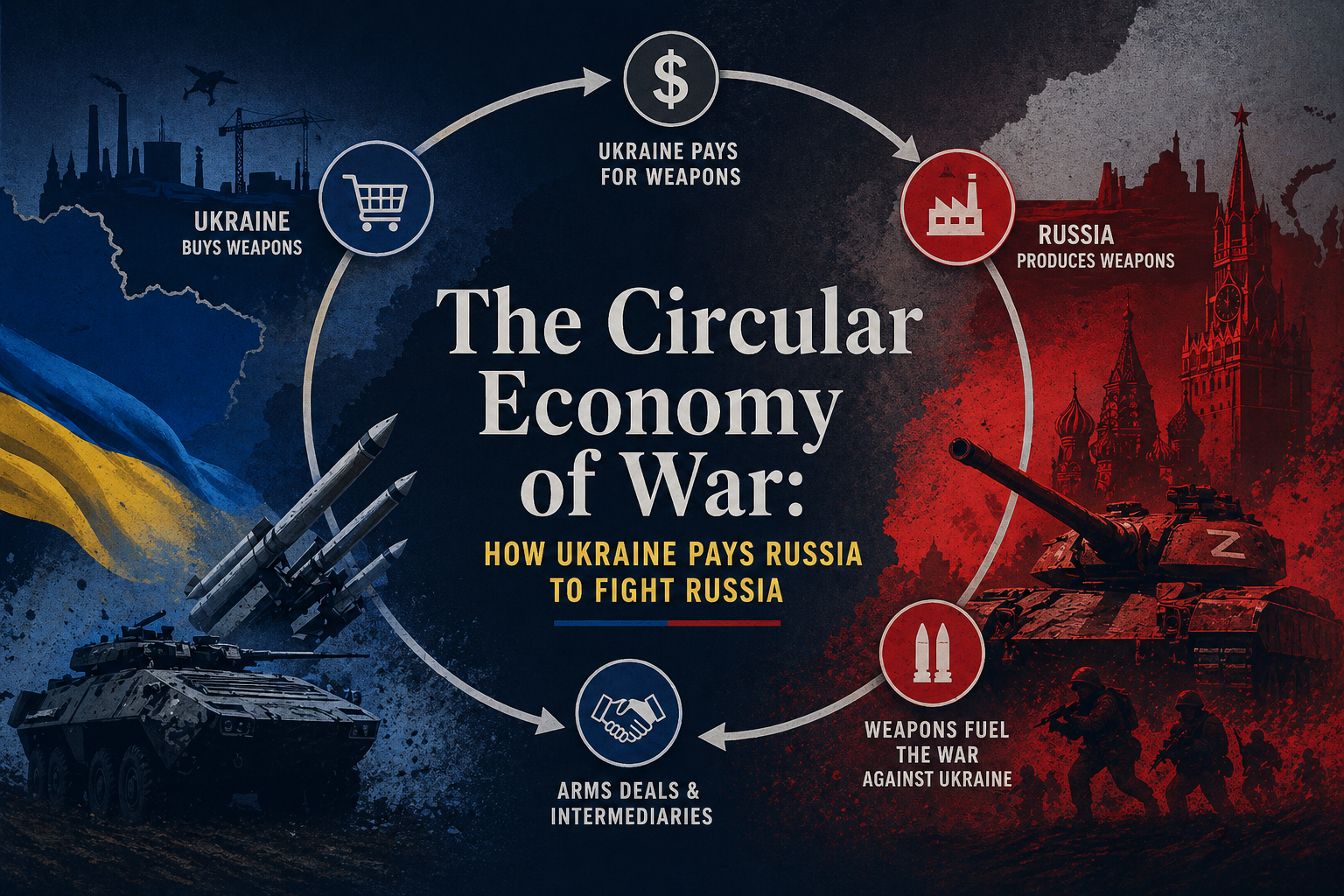
In a breathtaking display of bureaucratic geometry that would make a mathematician weep with joy, the European Union has finally agreed to unblock a €90 billion loan for Ukraine. The deal was reached only after Ukraine resumed pumping Russian oil through a pipeline that runs through Hungary and Slovakia, prompting Budapest to lift its veto on the funds. It is a diplomatic achievement that suggests the EU has decided that the best way to fund a war against Russia is to ensure Russia keeps selling fuel to its enemies.
The Orbán Pipeline Doctrine
The loan, which covers two-thirds of Ukraine’s financing needs for 2026 and 2027, was originally agreed upon in December but held hostage by Viktor Orbán. The outgoing Hungarian prime minister blocked the funds because he believed Kyiv had delayed repairs to the Druzhba pipeline, a piece of infrastructure that carries Russian oil to Hungary and Slovakia.
When the oil started flowing again, the veto vanished. It is a testament to the power of logistics over ideology: if you can get your gas through the pipe, you can get your money from the bank. One wonders if Orbán’s legacy will be remembered as “The Man Who Stopped War” or simply “The Man Who Wanted More Oil.”
Stealing from Peter to Pay Paul
The structure of the loan itself is particularly elegant in its simplicity. The EU will provide two interest-free loans of €45 billion each year, backed by the EU budget and borrowed on capital markets. Ukraine is not expected to pay this back from its own funds; instead, repayment is due when Russia starts paying reparations for the war.
This implies that the money will be paid back using the estimated €210 billion of Russian central bank assets frozen in the EU. In other words, the EU lends money to Ukraine today, and expects Russia to pay it back tomorrow from the cash they stole yesterday.
It is a financial loop that would make a circle of life documentary proud, except the lion is sleeping on top of the gazelle while eating its lunch.
Sanctions and Pipeline Synergy
The irony extends to the sanctions package that accompanied the loan. The EU has agreed on its 20th round of sanctions against Moscow, including restrictions on maritime services and trade bans. Yet, while these sanctions are being drafted, Ukraine is actively pumping Russian oil through Hungarian pipes.
The definition of “energy independence” seems to have been updated to mean “buying Russian fuel with European money.” Germany’s Rosneft subsidiary even announced it would halt oil flow from Kazakhstan to a German refinery, though officials insisted this would not “significantly restrict” operations.
One wonders if the restriction is significant enough to matter, or if it is merely a bureaucratic footnote in a war that has already consumed so much of the continent’s attention.
A Race Against Time
The timing of the agreement is equally telling. The loan was needed urgently because Ukraine could run low on money by June without it. Yet, the formal signoff was due by Thursday afternoon, and the first disbursement likely won’t happen until late May or early June.
It is a race against time where the finish line moves just as you cross it. Meanwhile, Orbán has lost his power to a centre-right challenger, Péter Magyar, but his veto held firm until the oil flowed. His legacy remains intact: he proved that even in 2026, a pipeline can stop a war more effectively than a speech.
The People Pay, Always
The regular people of Europe are left to navigate this complex web of loans and sanctions while driving cars on Russian fuel and paying for the war through their taxes. The EU’s economic commissioner, Valdis Dombrovskis, noted that the first disbursement was likely to be made at the end of May or in early June.
It is a promise of money that arrives just as the need becomes critical again.
In the meantime, the pipeline keeps flowing, the sanctions keep piling up, and the war continues, all funded by a system that seems designed to keep everyone busy while the real work gets done elsewhere. The EU has achieved something remarkable: a financial instrument so perfectly circular that it has no beginning, no end, and absolutely no chance of making sense to anyone who actually pays taxes.